Steak and Pasta Recipe: A Flavorful and Irresistible Meal for Any Night
I’m thrilled to share a delicious steak and pasta recipe that’s ideal for any night of the week. This dish blends the juicy tenderness of a perfectly cooked steak with the comforting warmth of pasta, creating a hearty meal that the whole family will love.

In this article, I’ll guide you through the process of creating this delicious steak and pasta dish, ensuring that you achieve a restaurant-quality dinner in the comfort of your own home.
Steak and Pasta Recipe
In this article, I’ll walk you through the process of preparing a mouth-watering steak and pasta dish that will give you a restaurant-quality dinner right at home. This simple yet elegant recipe is perfect for a weeknight meal and will impress the whole family.
Key Takeaways
- A simple yet elegant steak and pasta recipe ideal for weeknight dinners.
- The perfect balance of richness from the steak and the comforting texture of pasta.
- A restaurant-quality meal that can be easily made in your own kitchen.
- Clear guidance throughout the cooking process, making it easy to follow.
- A satisfying dish that everyone in the family will enjoy.
The Perfect Pairing of Steak and Pasta
The combination of steak and pasta is a timeless culinary classic that has been enjoyed for generations. Whenever I think of a satisfying dinner, this perfect duo always comes to mind. Paired together, steak and pasta create a versatile and enduring dish, making it an ideal choice for any steak and pasta dinner.

steak and pasta recipe
Why This Combination Works So Well
The synergy between steak and pasta is rooted in their complementary textures and flavors. A perfectly cooked steak, with its tender, juicy texture, pairs beautifully with pasta, which can range from al dente firmness to a softer consistency, depending on the type and cooking method. The robust flavors of a grilled or pan-seared steak are enhanced by the pasta’s ability to soak up the savory sauces or seasonings that accompany it. This harmonious balance creates a fulfilling meal that’s both satisfying and delicious.
A Brief History of Steak and Pasta Dishes
Historically, steak and pasta have been combined in various cuisines, particularly in Italian and American culinary traditions. Classic dishes like Steak Fettuccine Alfredo or Steak Carbonara showcase this pairing, where the richness of the steak is complemented by the creaminess or savory nature of the pasta dish. The evolution of these recipes over time has led to numerous variations, making the best steak and pasta recipe a versatile and timeless choice for dinner.
Essential Ingredients for the Perfect Steak and Pasta Recipe
The key to a mouth-watering Steak and Pasta Recipe starts with selecting the finest ingredients. When preparing a homemade steak and pasta dish, it’s essential to focus on the quality of the steak, pasta, and additional seasonings to create an easy steak and pasta recipe that is both flavorful and satisfying.
Selecting the Right Cut of Steak
Choosing the right cut of steak is crucial for a great Steak and Pasta Recipe. The most popular cuts include ribeye, sirloin, and strip steak, each offering unique characteristics.
Ribeye vs. Sirloin vs. Strip Steak
Ribeye steak is known for its marbling, which makes it tender and juicy. Sirloin steak, on the other hand, is leaner and often less expensive. Strip steak, or strip loin, offers a balance between tenderness and flavor.
Quality Indicators to Look For
When selecting a steak, look for quality indicators such as marbling, color, and firmness. A good steak should have a rich red color and a firm texture.

steak and pasta dish
Choosing the Best Pasta Shape
The shape of the pasta can greatly impact the overall dish. For a Steak and Pasta Recipe, it’s best to choose pasta shapes that hold onto the sauce well, such as pappardelle, fettuccine, or linguine.
| Pasta Shape | Suitability for Steak and Pasta |
| Pappardelle | Excellent for hearty sauces |
| Fettuccine | Pairs well with creamy sauces |
| Linguine | Ideal for light, oily sauces |
Key Seasonings and Aromatics
To enhance the flavor of your Steak and Pasta Recipe, don’t forget the key seasonings and aromatics. Garlic, onion, fresh herbs like parsley and thyme, salt, and black pepper are essential for adding depth to your dish.
Kitchen Equipment You’ll Need
To cook a steak and pasta dish to perfection, it’s essential to have the right kitchen tools at your disposal. Having the necessary equipment not only makes the cooking process smoother but also more enjoyable.
Essential Cookware
The right cookware is the backbone of any kitchen, especially when it comes to cooking a steak and pasta recipe. You’ll need a large skillet or pasta pan for sautéing your steak and pasta, and a heavy-bottomed pot for boiling pasta. A cast-iron skillet is ideal for searing steaks as it retains heat well.
- A large skillet or pasta pan
- A heavy-bottomed pot
- A cast-iron skillet
Helpful Tools and Gadgets
Having the right tools and gadgets can significantly enhance your cooking experience. For a steak and pasta dish, you’ll need tongs for handling pasta and steak, a meat thermometer to ensure your steak is cooked to the right temperature, and a grater for grating Parmesan cheese or other ingredients. Other helpful gadgets include a pasta cutter or garlic press.
- Tongs
- A meat thermometer
- A grater
- A pasta cutter or garlic press
Preparing Your Ingredients
The secret to a great steak and pasta recipe lies in the preparation. Properly prepping your ingredients can make a significant difference in the final result.
Prepping the Steak
To start, let’s focus on the steak. Proper preparation involves two key steps: seasoning and bringing it to room temperature.
Proper Seasoning Techniques
Seasoning is crucial. I recommend using a mix of salt, pepper, and your favorite herbs. Generously coat both sides of the steak to ensure flavor.
Bringing to Room Temperature
Before cooking, it’s essential to bring the steak to room temperature. This helps in achieving a more even cook. Simply let it sit on the counter for about 30 minutes to an hour before cooking.
Preparing the Pasta Components
For the pasta, you’ll need to select the right type and prepare it according to the package instructions. I prefer using high-quality pasta for the best steak and pasta recipe. Ensure it’s cooked al dente, as this provides the best texture.
Making the Sauce Base
A flavorful sauce base is vital. I like to start with a mixture of olive oil, garlic, and onions, sautéed until fragrant. Then, you can add your choice of tomatoes or cream to create the desired sauce. As celebrity chef, Gordon Ramsay, once said,
“The key to a great sauce is in the reduction and the quality of the ingredients.”
This principle guides my approach to making the sauce base for my steak and pasta dishes.
By focusing on these preparation steps, you’ll be well on your way to creating a delicious steak and pasta recipe that will impress anyone.
Steak and Pasta Recipe: My Classic Version
I’ve perfected a simple yet elegant steak and pasta dish that’s perfect for any night of the week. This recipe brings together the best of both worlds, combining a tender, flavorful steak with perfectly cooked pasta and a rich, savory sauce.
Complete Ingredient List
To make my classic steak and pasta recipe, you’ll need the following ingredients:
- 1.5 lbs ribeye or strip steak
- 1 cup pasta of your choice (e.g., fettuccine or pappardelle)
- 2 tablespoons olive oil
- 1 onion, finely chopped
- 2 cloves garlic, minced
- 1 cup beef broth
- 1 cup heavy cream
- 1 tablespoon Dijon mustard
- 1 teaspoon dried thyme
- Salt and pepper, to taste
- Grated Parmesan cheese, for serving
| Ingredient | Quantity | Purpose |
| Steak | 1.5 lbs | Main protein component |
| Pasta | 1 cup | Carbohydrate base |
| Olive Oil | 2 tablespoons | Cooking medium |
| Garlic | 2 cloves | Flavor enhancer |
Step-by-Step Instructions
Now that we have our ingredients, let’s move on to the cooking process. This recipe is straightforward and easy to follow.
Preparing the Steak
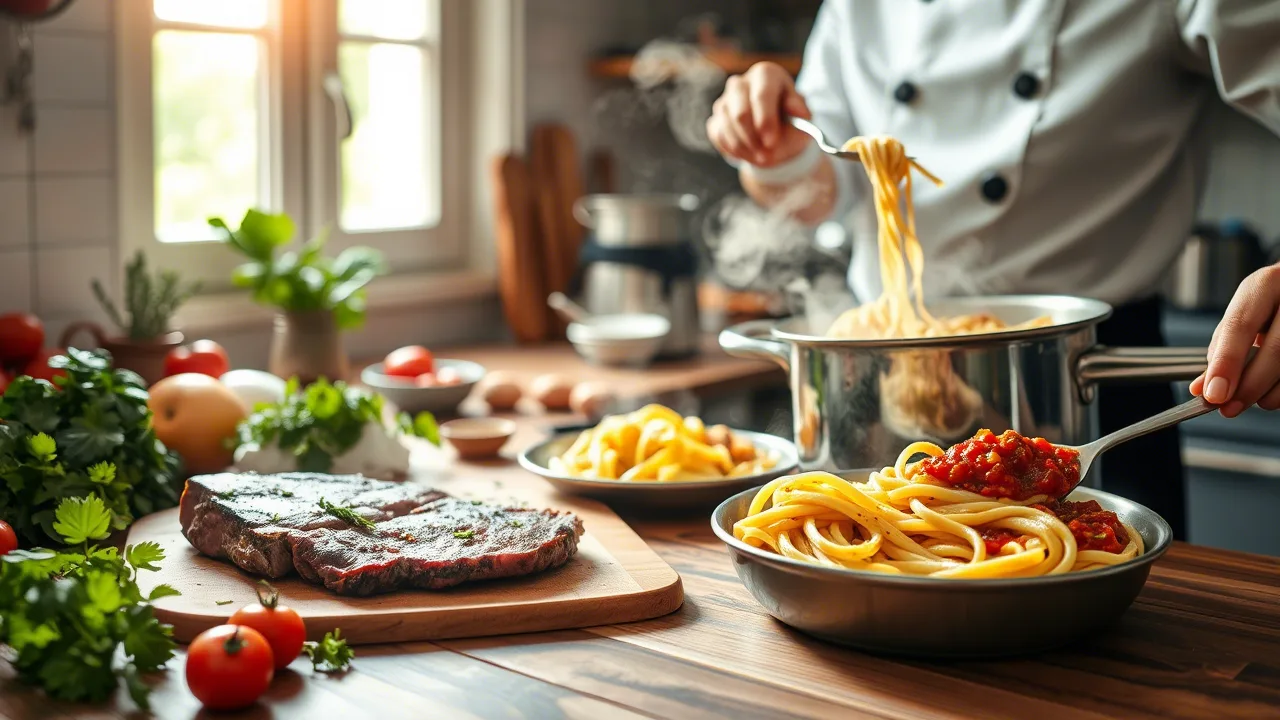
Start by seasoning the steak with salt, pepper, and thyme. Heat one tablespoon of olive oil in a skillet over medium-high heat. Sear the steak for 3-4 minutes per side, or until it reaches your desired level of doneness. Let it rest before slicing.
Cooking the Pasta
Bring a large pot of salted water to a boil. Cook the pasta according to the package instructions until al dente. Reserve 1 cup of pasta water before draining.
Creating the Sauce
In the same skillet used for the steak, add the remaining tablespoon of olive oil. Sauté the chopped onion until translucent, then add the minced garlic and cook for another minute. Pour in the beef broth, scraping the bottom of the pan to release any browned bits. Bring to a simmer and let reduce slightly. Stir in the heavy cream and Dijon mustard. Season with salt and pepper to taste.
Combine the cooked pasta with the sauce, adding some reserved pasta water if the sauce is too thick. Slice the rested steak against the grain and serve atop the pasta. Finish with grated Parmesan cheese.
This easy steak and pasta recipe is a crowd-pleaser and can be adjusted to suit your taste preferences. Enjoy your homemade steak and pasta!
Cooking the Perfect Steak
To cook a steak to perfection, you need to understand the importance of temperature, timing, and resting. A perfectly cooked steak is the crown jewel of a steak and pasta dinner, making it a truly satisfying meal.
Temperature and Timing Guidelines
Cooking a steak to the right temperature is crucial. Use a thermometer to ensure your steak reaches a safe internal temperature. For a delicious steak and pasta, aim for the following internal temperatures: rare (120°F – 130°F), medium-rare (130°F – 135°F), medium (140°F – 145°F), medium-well (150°F – 155°F), and well-done (160°F – 170°F).
| Doneness | Internal Temperature | Cooking Time (per side) |
| Rare | 120°F – 130°F | 2-3 minutes |
| Medium-Rare | 130°F – 135°F | 3-4 minutes |
| Medium | 140°F – 145°F | 4-5 minutes |
Achieving Your Desired Doneness
The key to achieving your desired doneness is to not press down on the steak while it’s cooking, as this can squeeze out juices and make the steak tough. Instead, let it cook undisturbed for the recommended time.
Resting the Steak Properly
Once your steak is cooked to your liking, remove it from the heat and let it rest. This allows the juices to redistribute, making the steak more tender and flavorful. I recommend resting the steak for 5-10 minutes before slicing it thinly against the grain.
Mastering the Pasta Element
The pasta component of your steak and pasta recipe deserves just as much attention as the steak itself. A well-cooked pasta dish can elevate the entire meal, making it more satisfying and enjoyable.
Al Dente Perfection
To achieve al dente perfection, it’s essential to monitor the cooking time closely. Overcooking can result in mushy, unappetizing pasta. I recommend checking the pasta frequently towards the end of the recommended cooking time. The ideal texture is slightly firm in the center.
Creating a Flavorful Sauce
A flavorful sauce can make or break your steak and pasta dish. There are several options to consider, including cream-based and tomato-based sauces.
Cream-Based Options
Cream-based sauces add a rich, velvety texture to your pasta. Garlic parmesan and mushroom cream are popular choices that complement steak nicely. To make a cream-based sauce, start by sautéing garlic and onions, then add heavy cream and your choice of cheese.
Tomato-Based Alternatives
For a lighter, fresher flavor, consider a tomato-based sauce. Arrabbiata and marinara are spicy and tangy options that pair well with grilled steak. To make a tomato-based sauce, sauté crushed tomatoes with garlic, olive oil, and herbs like basil.
| Sauce Type | Flavor Profile | Best Paired With |
| Cream-Based | Rich, creamy | Grilled steak, mushrooms |
| Tomato-Based | Light, tangy | Grilled steak, vegetables |
Bringing It All Together
As I finish cooking the steak and pasta, the moment of truth arrives – it’s time to bring everything together on the plate. The way I present my dish can make a significant difference in how it’s perceived and enjoyed. In this section, I’ll focus on the techniques that can elevate my homemade steak and pasta to a restaurant-quality meal.
Plating Techniques
Plating is an art that involves more than just placing food on a plate; it’s about creating a visual experience. To start, I ensure that my steak is sliced against the grain, making it more tender and easier to chew. Then, I arrange the pasta in a way that it complements the steak, often twirling it around the plate or placing it beside the steak in a harmonious manner. The portioning is also crucial – I make sure that the plate is filled but not overcrowded, as this can detract from the overall presentation.
Garnishing for Flavor and Presentation
Garnishing is not just about adding a sprinkle of parsley for the sake of appearance; it’s about enhancing the flavor and aroma of the dish. For my steak and pasta, I often use fresh herbs like parsley or basil, which add a bright, fresh flavor. A sprinkle of parmesan cheese can also enrich the dish, adding a salty, umami taste. Additionally, a drizzle of extra virgin olive oil or a sprinkle of red pepper flakes can add depth and a touch of spice, respectively.
| Garnish | Flavor Profile | Visual Appeal |
| Fresh Parsley | Bright, Fresh | High |
| Parmesan Cheese | Salty, Umami | Medium |
| Extra Virgin Olive Oil | Fruity, Smooth | Low |
| Red Pepper Flakes | Spicy | Low |
By paying attention to both plating techniques and garnishing, I can create a steak and pasta with sauce that is not only delicious but also visually appealing, making my homemade steak and pasta a true delight.
Variations on the Classic Steak and Pasta Recipe
One of the joys of cooking is experimenting with different flavors and cuisines, and the classic steak and pasta recipe is no exception. This timeless dish can be modified and elevated in numerous ways, allowing home cooks to put their own twist on a beloved classic.
Italian-Inspired Versions
For an Italian-inspired version, consider incorporating ingredients like prosciutto di Parma or guanciale to add a salty, savory depth to the dish. You can also use fresh arugula and a squeeze of fresh lemon juice to brighten the flavors. Using pappardelle or tagliatelle pasta can also help to create a more authentic Italian experience.
Asian Fusion Options
To give the steak and pasta recipe an Asian fusion twist, try marinating the steak in a mixture of soy sauce, ginger, and garlic before grilling. You can also add stir-fried bok choy or Chinese broccoli to the pasta, and finish the dish with a drizzle of sesame oil and a sprinkle of sesame seeds for added texture and flavor.
Mediterranean Twists
For a Mediterranean twist, incorporate ingredients like kalamata olives, artichoke hearts, or sun-dried tomatoes into the pasta dish. Adding a sprinkle of crumbly feta cheese and a drizzle of extra virgin olive oil can also enhance the Mediterranean flavors. Using orzo or penne pasta can help to complement the hearty ingredients typical of Mediterranean cuisine.
| Variation | Key Ingredients |
| Italian-Inspired | Prosciutto, arugula, lemon juice |
| Asian Fusion | Soy sauce, ginger, garlic, bok choy |
| Mediterranean | Kalamata olives, artichoke hearts, feta cheese |
Troubleshooting Common Issues
Even with careful planning, mistakes can happen in the kitchen, but knowing how to fix them can save your steak and pasta dinner. In this section, we’ll tackle some common problems that may arise when cooking steak and pasta, such as overcooked steak, dry or sticky pasta, and sauce consistency issues.
Fixing Overcooked Steak
If your steak is overcooked, it can become tough and chewy. To avoid this, it’s essential to monitor the steak’s temperature closely. If it’s already overcooked, consider slicing it thinly against the grain to make it more palatable. You can also serve it with a sauce or gravy to add moisture and flavor.
Rescuing Dry or Sticky Pasta
Dry or sticky pasta is often a result of overcooking or inadequate sauce. To rescue your pasta, try adding a bit more olive oil or sauce to loosen it up. If the pasta is overcooked, you can try adding some freshly cooked pasta to the dish to achieve a better texture balance.
Adjusting Sauce Consistency
If your sauce is too thick, you can thin it out with a bit of pasta cooking water or heavy cream. Conversely, if it’s too thin, you can simmer it for a few minutes to reduce the liquid and intensify the flavors. Adjusting the sauce consistency can make a significant difference in the overall quality of your steak and pasta recipe.
Nutritional Information and Serving Suggestions
Savoring a steak and pasta dish involves not just enjoying its flavor, but also being aware of its nutritional profile. This awareness allows you to make informed decisions about your meal, enhancing your overall dining experience.
Calorie and Macronutrient Breakdown
A typical serving of steak and pasta can vary in calorie count based on the cut of steak, type of pasta, and sauce used. On average, a serving can range from 500 to 800 calories. The macronutrient breakdown includes proteins from the steak, carbohydrates from the pasta, and fats from both the steak and the sauce.
| Nutrient | Amount per Serving |
| Calories | 650 |
| Protein | 50g |
| Carbohydrates | 40g |
| Fats | 30g |
Wine and Side Dish Pairings
Pairing your steak and pasta with the right wine and side dishes can elevate your meal. For a delicious steak and pasta, consider a glass of Cabernet Sauvignon or Merlot. Side dishes like garlic bread or a green salad complement the meal nicely, offering steak and pasta ideas that are both satisfying and flavorful.
Conclusion
I hope this guide has been helpful in your cooking journey, and I encourage you to experiment with this steak and pasta recipe, making it your own by incorporating your favorite flavors and ingredients. Whether you’re cooking for a weeknight dinner or a special occasion, a homemade steak and pasta dish is sure to impress. By following the steps outlined in this article, you’ll be well on your way to creating the best steak and pasta recipe that suits your taste.
As you continue to explore the world of culinary delights, remember that the art of cooking is not just about following a recipe, but also about understanding the nuances that make a dish truly special. So, don’t be afraid to try new ingredients, techniques, and variations to make this steak and pasta recipe your own.
FAQ
What is the best type of steak to use for this recipe?
The best type of steak to use is a matter of personal preference, but ribeye, sirloin, and strip steak are popular choices due to their tenderness and flavor.
Can I use different types of pasta for this recipe?
Yes, you can use various pasta shapes, such as fettuccine, linguine, or pappardelle, depending on your preference and the sauce you’re using.
How do I achieve the perfect doneness for my steak?
To achieve your desired doneness, use a meat thermometer to check the internal temperature of the steak, and let it rest for a few minutes before slicing.
What are some common issues that may arise when cooking steak and pasta?
Common issues include overcooked steak, dry or sticky pasta, and sauce consistency problems, which can be addressed with troubleshooting techniques.
Can I customize the Steak and Pasta Recipe to suit my taste preferences?
Yes, you can modify the recipe by using different seasonings, sauces, and ingredients to create variations, such as Italian-inspired, Asian fusion, or Mediterranean twists.
How do I store leftovers of the Steak and Pasta Recipe?
Store leftovers in an airtight container in the refrigerator, and reheat the dish gently to avoid overcooking the steak or pasta.
What are some wine and side dish pairing suggestions for the Steak and Pasta Recipe?
Wine pairing suggestions include a dry red wine, such as Cabernet Sauvignon or Merlot, while side dish pairings could be roasted vegetables, garlic bread, or a simple green salad.